
Foundation Repair
in Raleigh by Alex
Get Free In-House Estimate
"*" indicates required fields
asterisk ( * ) are required
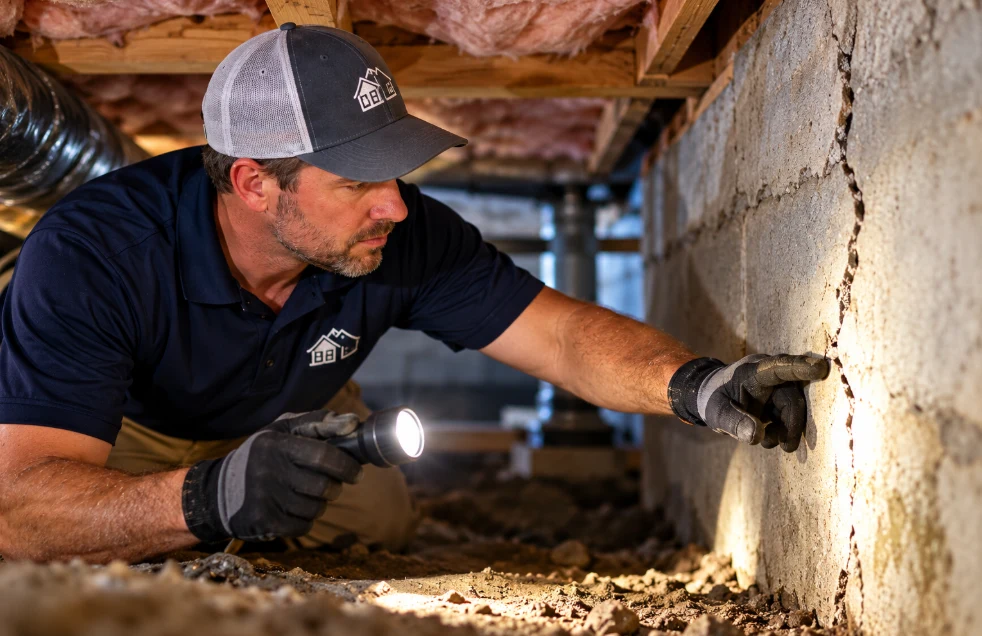
Local foundation repair specialists
I'm Alex, and I've spent years crawling under houses, standing in basements with a level, and explaining to homeowners what's actually happening beneath their feet.
Foundation problems in this part of North Carolina aren't rare. They're just usually ignored until a door won't close or a crack runs wide enough to slide a coin into.
This page walks through what causes foundation movement here, what the repair options actually involve, and what to expect if you call us.




YOU HAVE QUESTIONS,
WE HAVE ANSWERS.
Whether you're buying, selling, or simply maintaining your house, foundation repair is one upgrade that always comes up in conversations about older homes.
Why Foundations Move Around Here
The Piedmont region sits on clay heavy soil, and that clay behaves like a sponge. It swells when it absorbs water and shrinks when it dries out. A wet spring followed by a dry August puts a foundation through a cycle of expansion and contraction every single year.
Do that for twenty or thirty years and the concrete starts to tell the story: stair step cracks in brick veneer, gaps at the top of interior walls, floors that slope toward the center of the house.
Older neighborhoods with homes built in the 1970s through the 1990s tend to show this the most, since a lot of that construction used shallow footings that weren't rated for the amount of clay movement we now understand this soil produces. Newer construction isn't immune either.
Poor grading around a new build can funnel water straight toward the footer, and that's a problem regardless of the permit date.
Signs Worth Paying Attention To
- Cracks in drywall that run diagonally from door or window corners
- A front porch or stoop pulling away from the main structure
- Windows and doors that stick or won't latch the way they used to
- Visible gaps between the baseboard and the floor
- A crawl space with standing water or a musty smell after rain
- Floors that noticeably slope when you set a marble down
One crack doesn't always mean a structural issue. Hairline cracks in drywall happen from normal house settling and seasonal humidity changes. What I look for is width, direction, and whether it's getting worse over a few months.
That's the difference between cosmetic and structural, and it's worth having someone actually measure it rather than guessing from a photo.
How We Actually Fix It
There's no single fix that works for every house. The method depends on soil depth, how far the foundation has settled, and what's causing the movement in the first place.
| Method | When It's Used | What It Involves |
|---|---|---|
| Push piers | Homes with heavier structural loads, deeper settlement | Steel piers driven to load bearing soil or bedrock, house lifted and stabilized |
| Helical piers | Lighter structures, porches, additions | Screw type piers twisted into the ground, less vibration than driven piers |
| Polyurethane foam injection | Slab settlement, sunken sidewalks or driveways | Expanding foam injected beneath the slab to lift and fill voids |
| Wall anchors or carbon fiber straps | Bowing basement or crawl space walls | Steel anchors or reinforcement strips installed to stop further inward movement |
We install helical piers from Chance and use PolyLevel for slab lifting on most jobs, though we've also worked with Earth Contact Products push pier systems on deeper commercial foundations. Grip-Tite wall anchors show up a fair amount too, particularly on older basement walls that are bowing but haven't cracked through yet.
I mention the brand names because homeowners researching this online run into a lot of them, and it helps to know which system does what instead of treating "foundation repair" as one generic service.
Not every job needs piers. Sometimes the actual fix is grading and drainage work: extending downspouts, regrading soil away from the foundation, adding a French drain along a problem side of the house. I'd rather tell a homeowner they need $2,000 in drainage correction than sell them a $15,000 pier system they don't need yet.
That approach costs me some revenue short term. It's also the only way I keep getting referrals from past customers, which matters more.
What Repairs Typically Run
Costs vary a lot depending on scope, but here's a rough breakdown based on jobs we've done in the Triangle area:
- Minor crack repair and sealing: $500 to $1,500
- Drainage correction (regrading, downspout extension, French drain): $1,500 to $6,000
- Crawl space encapsulation: $5,000 to $15,000 depending on square footage
- Pier installation (per pier, push or helical): $1,200 to $2,500
- Full foundation stabilization on a mid sized home: $10,000 to $30,000+
A lot of foundation repair companies quote a flat number over the phone before anyone's inspected the crawl space. We don't do that. The quote you get from us comes after someone has actually been under the house with a flashlight and a moisture meter.
What the Local Market Looks Like Right Now
Raleigh's housing stock skews older in the established neighborhoods inside the beltline, and a lot of those homes are hitting the age where original foundation work starts needing attention, usually somewhere between 30 and 50 years after construction.
Newer subdivisions further out tend to have fewer structural issues but more drainage complaints, since large scale grading during development doesn't always account for how water moves once every lot has a house, a driveway, and a lawn on it instead of open field.
We've also seen an uptick in crawl space encapsulation requests over the past few years, partly driven by the region's humidity and partly by buyers doing pre purchase inspections finding moisture issues that sellers hadn't addressed.
If you're buying or selling a home with an unaddressed crawl space or foundation issue, it's worth getting an inspection before it becomes a negotiation problem at closing.
How We Work
First visit is a full inspection, inside and out, crawl space included if there is one. We take photos, measure crack widths, check the yard's slope and drainage. Then we write up what we found in plain language, not a sales pitch dressed up as a report.
If repair is needed, we explain the options, including the cheaper ones if they'll actually solve the problem. We pull permits when the work requires it. And we stand behind the work with a written warranty, because a foundation repair that fails in five years isn't a repair, it's a delay.
If you're seeing cracks, sticking doors, or a crawl space that smells like it shouldn't, give us a call. We'll tell you honestly whether it's something to watch or something to fix now.
Foundation Repair Pros
Trusted Customer Reviews
4.9
Based on 41 reviews

Recommended
by 98% of customers
My realtor recommended Alex, professional, straightforward, thorough. He analyzed our crawlspace and gave a maintenance guide. Truly hassle free service.
Stephanie Gibson - Raleigh
Alex sent Brian Young to assess our spreading driveway cracks, thorough, professional, and great at explaining the process and company.
Stanley Lafferty - Durham
Alex quickly diagnosed our drainage and erosion issues, designing fixes that passed a real downpour test days later. Highly recommend Alex!
Catalina Vachon - Raleigh
Get a Free Estimate
We measure on-site, explain your options clearly, and give you a written quote with no pressure to decide on the spot. Call us at (919) 350-7836 or use the contact form on this page to schedule your estimate.
Call: (919) 350-7836